Dietetic Internship

Overview

Viterbo's Dietetic Internship is open to students who have completed the knowledge requirements as defined by the 2017 Accreditation Council for Education in Nutrition and Dietetics' Standards of Education as part of a DPD program and who have completed a bachelor's degree. Students can also pair their Dietetic Internship with our Master of Science in Community Medical Dietetics.

More on Dietetic Internship

Policy

The DI program is only open to students who have completed the Academy of Nutrition and Dietetics (AND) foundation knowledge and skills in previous undergraduate work. The DI allows for the mastery of practitioner competencies set forth by ACEND for entry level dietitians through approximately 1230 hours of supervised practice experience in cooperating facilities as described previously for the CMD program. Upon successful completion of the dietetic internship students are eligible to write the Registration Examination for Dietitians.

Admission
The applicant must satisfy the following criteria:

  • hold a bachelor’s degree from an accredited institution;
  • completed the Academy of Nutrition and Dietetics approved minimum academic requirements, as evidenced through a Verification Statement from a Didactic Program in Dietetics;
  • have a 3.0 (on a 4.0 scale) cumulative undergraduate grade point average (GPA)

Other criteria used in the decision to accept a student include grades in undergraduate science and nutrition courses and good verbal and communication skills. The number of eligible students accepted is limited by the number of opportunities for placement in supervised practice facilities. All applicants must participate in the national online application process and national computer matching system for dietetic internships. Students must also complete required immunizations and successfully complete a Background Information Disclosure form and a criminal history check that is in compliance with the Wisconsin Caregiver Law. Those whose criminal history check identifies bars to clinical placement or places restrictions on client contact may not be allowed to progress in the program.

Learning Outcomes
  • Scientific and Evidence Base of Practice: Integrate scientific information and translation of research into practice
  • Professional Practice Expectations:  Demonstrate beliefs, values, attitudes, and behaviors for the professional dietitian nutritionist level of practice
  • Clinical and Customer Services: Develop and deliver information, products, and services to individuals, groups, and populations
  • Practice Management and Use of Resources: Strategically apply principles of management and systems in the provision of services to individuals and organizations
  • Provide nutrition education to community groups for health promotion and disease prevention using a variety of technology
  • Develop and conduct community nutrition research
  • Participate in physical assessment screenings at community health events
Addendum

The Dietetic Internship (DI) is currently granted accreditation by the Accreditation Council for Education in Nutrition and Dietetics, 120 South Riverside Plaza, Suite 2000, Chicago, IL 60606-6995, 800-877-1600.
Dual DNP and MBA

Overview

If you already hold a BSN or MSN degree, our MBA/DNP dual degree prepares you for leadership roles, to educate future nurses, and to influence systems of care. This integrated dual degree program provides registered nurses a direct path to their career goals with critical business and management skills needed for successful health care leaders. Save time and money with this integrated program.

  • Leadership Pathway (Does not lead to National Board Certification) 
  • 3 year plan; 54-62 credits 
  • For students with a BSN who are in or aspire to be in leadership roles where critical business and management skills are needed in the ever-changing health care environment
     

AGNP (Adult Gerontology Nurse Practitioner)

Overview

This program is designed for nurses who have their BSN, and are looking to attain their DNP with a focus on gerontology.  Graduates in this track will be prepared to manage health and illness states of varying complexity in adolescents, adults, and aged individuals and to promote optimum health-related quality of life. The provision of high quality, cost effective primary health care to patients/families/aggregates in a variety of settings is emphasized.

  • Licensure Pathway (Primary Care)
  • 3-4 year plans; 59-62 credits
  • For students with a BSN or MSN who want to provide primary care to adolescents through end of life

Nursing (BSN)

About Nursing

Learn how to provide holistic care that combines scientific knowledge with empathy and compassion. 

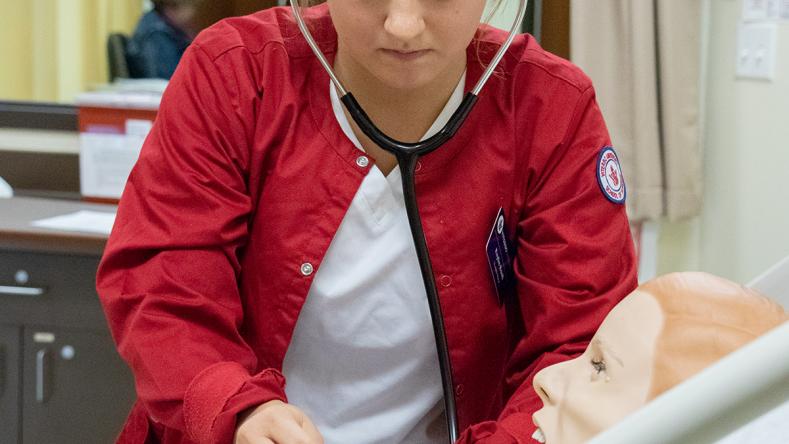
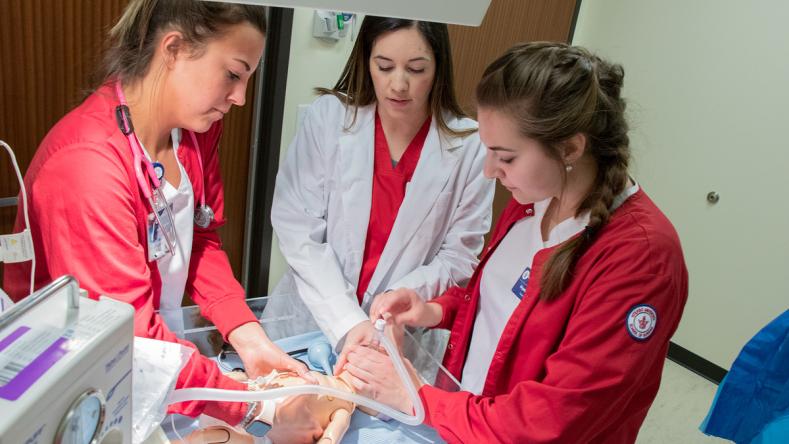
Viterbo’s nursing program prepares you to become confident, highly skilled nurses who deliver exceptional, compassionate care. Through hands-on learning in a state-of-the-art clinical simulation lab, you will build critical thinking, clinical judgment, and real-world experience before entering clinical settings. 

Program Highlights:

  • Direct admission
  • Early clinical placements with regional healthcare leaders
  • State-of-the-art Clinical Simulation Learning Lab
  • High state board (NCLEX-RN) pass rates
  • 100% BSN program grads are employed in their field

Careers in Nursing

Common nursing specialties include...

  • Emergency room nurse
  • Oncology nurse
  • Critical care/ICU nurse
  • Labor and delivery nurse
  • Pediatric nurse
  • Geriatric nurse

100% BSN program grads are employed in their field

High state board (NCLEX-RN) pass rates

$81,000 median salary for RNs with a BSN degree

Why study this program at Viterbo?

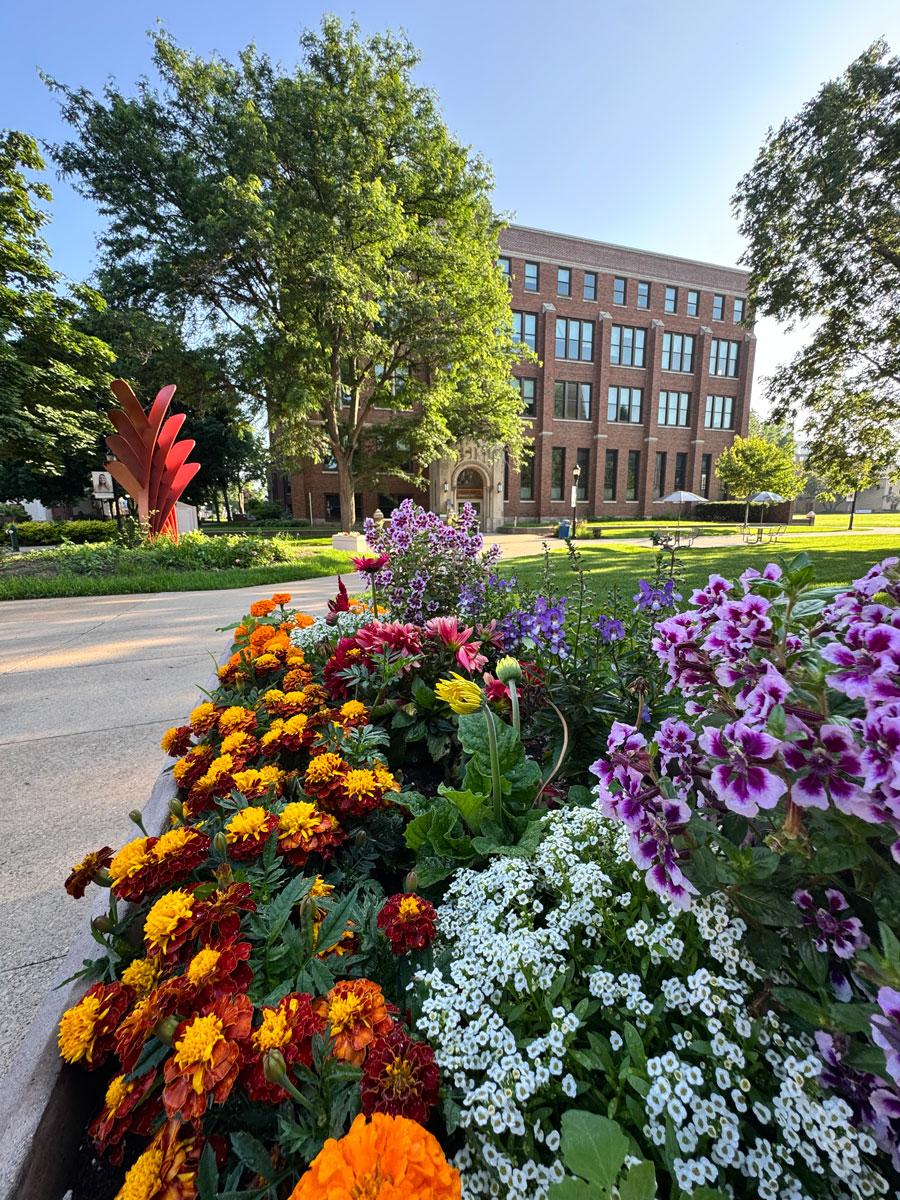
Campus shot with flowers

Ready to get started?

Request Further Information

CRNA (Certified Registered Nurse Anesthetist)

Overview

The innovative Doctor of Nursing Practice (DNP) Certified Registered Nurse Anesthetist (CRNA) option uses both face-to-face and web-enhanced courses to offer  high quality, interactive instruction.  Students have the opportunity for expertly supervised clinical practicum experiences in the second and third year of the 36-month year-round program. Students complete 22 doctoral level credits at Viterbo, transferring in a Master of Science in Biology degree from UW- La Crosse and 21  Mayo Clinic Health System – Franciscan Healthcare School of Anesthesia credits to graduate with a Doctor of  Nursing Practice degree. The Doctor of Nursing Practice degree and clinical credits from the School of Anesthesia are required to sit for the national board certification exam to be licensed as a Certified Registered Nurse Anesthetist (CRNA).

  • National Board Certification Pathway
  • 3 year plan; 78 credits 
  • For students with a BSN who want to provide anesthesia care for procedures and surgeries and work in a variety of settings (for example: operating rooms, surgical centers, same-day procedures)
Policy

Academic Standing - Satisfactory Progress
Graduate nursing students are expected to earn a B or better in all of their courses AND maintain a semester GPA of at least 3.0 or better.

Required Background Check
Federal and state statutes require that criminal background checks be completed for all persons who provide nursing care for others or who have access to people who receive care. Clinical agencies prohibit placement of students with criminal histories of specific crimes and offenses that have been identified by the state of Wisconsin or others as bars to employment or licensure (such as abuse, assault, or neglect). The School of Nursing requires that all students complete a background information disclosure statement and a criminal history search. Individuals whose background check identifies bars to the provision of care in contracted agencies or places restrictions on client contact will not be allowed to progress in the program.

Transfer Credits Upon Admission 
Individual consideration will be granted in the awarding of transfer credits. Up to 18 credits may be transferred from another program and utilized to meet the post-baccalaureate to DNP program requirements of Viterbo University if equivalent. Up to nine credits may be transferred to the post-MSN to DNP program, if equivalent. In order to be considered for transfer, the grade earned must be at least a B. Transfer credits must be graduate credit taken from an accredited institution of higher education completed within the last five years and equivalent to the course it is replacing in the requirements at Viterbo. Courses older than five years may be given credit based on individual review. Students who wish to transfer credits must have an official transcript sent to the director of graduate nursing program. Courses will be evaluated for equivalency and written notification of acceptance of transcript credit will be provided to the student by the director.

Transfer Credits After Admission 
The faculty of the Viterbo University graduate nursing program has carefully planned and developed a curriculum to meet the needs of the potential graduates of the chosen tracks. The content for the curriculum was designed for the curricular and graduate outcomes unique to this program and the specific role preparation. In view of the connection of the curriculum to the desired outcomes and the quality of the graduate, once a student has begun classes as a degree-seeking student in the Viterbo University graduate nursing program, all classes (excluding electives) must be taken at Viterbo University. Note: This policy is not applicable to post-MSN to DNP students wishing AGNP or FNP role preparation whose plan of study will be determined on an individual basis or to agreements established with collaborating institutions.

Time for Completion of Graduate Nursing Degrees
Six credits per semester is considered full-time study; however some semesters contain substantially more credits in the full time plan of study.

  • The post BSN to DNP program can be completed in three years. It is expected that students will complete the program within seven years or less.
  • The post MSN to DNP program can be completed in two years. It is expected that students will complete the program in four years or less.
  • The post MSN to DNP program including NP role preparation can be completed in three years. It is expected that students will complete the program in seven years or less.
  • Time spent as a non-degree student does not count toward the completion period, but students will be subject to the catalog/curriculum requirements in effect at the time they become degree seeking.
  • All full-time and part-time degree-seeking students who have not been granted a leave of absence must register each semester until all degree requirements are completed.

Practicum/Clinical Experience

  • A student receiving a C or less for clinical practicum may be dismissed from the program. If dismissal does not occur, the student will be placed on a clinical remediation contract for the subsequent practicum, must repeat the course with a B or better grade, and must achieve B or better in all remaining practicum courses to remain in the program.
  • Prescribed numbers of clinical hours have been incorporated into the various plans of study available within the graduate nursing program. Students must have an RN license for the state in which the clinical site is located. The number of clinical hours varies depending on the track chosen. A ratio of four clock hours to one didactic hour per week is used; therefore one credit of practicum credit is 60 hours of clinical for the APRN and NP tracks. The student will receive a grade for clinical practicum experiences, a BC or better is required for progression. Receiving C or below may contribute to a decision to dismiss a student from the program or specific remediation procedures.

Didactic Classes (includes theory, seminar, and culminating project credits)

  • A student in the graduate nursing program who earns a C in any course, OR goes below a semester GPA of 3.0, will be placed on probationary status and must achieve a grade of B or better in all subsequent courses AND maintain a semester GPA of 3.0 or better to remain in the program.
  • A student who earns less than a C will be required to repeat the course and earn B or better in this and all subsequent classes and maintain a semester GPA of 3.0 or better to remain in the program.

DNP Project
Students will conduct a scholarly project over two or more semesters. This project is an opportunity for students to engage in independent research/evidence-based inquiry/scholarly work in a defined area of significance to the advanced nursing role. Students will work with faculty advisors for assistance, critique, and expertise. The student will receive a grade at the end of each semester of DNP project registration, and B or better indicates satisfactory progress. Students are required to disseminate their work in a prescribed way.

Certification
http://www.viterbo.edu/graduate-program-nursing

Learning Outcomes
  • Practice in an expanded, specialized, and/or advanced nursing role.
  • Affirm the dignity of life and human diversity.
  • Advocate for quality outcomes for individuals, families, populations, and systems.
  • Demonstrate ethical leadership and faithful service in their chosen roles and settings.
  • Facilitate the translation of research and evidence into practice.
  • Utilize technology to impact best practice.
Addendum

Accreditation

The School of Nursing is approved by the Wisconsin State Board of Nursing; P.O. Box 8935, Madison, WI 53708; 608-266-2112; web@drl.state.wi.us; and accredited at the DNP level by the Commission on Collegiate Nursing Education; One Dupont Circle, NW, Suite 530; Washington, DC 20036; 202-887-6791; 202-887-8476 (fax); www.aacn.nche.edu/accreditation.

Admission

Program admission requirements and procedures may be found at http://www.viterbo.edu/graduate-program-nursing/application-procedures

Provisional Admission

Occasionally a student does not meet the admission criteria in all respects, but shows promise of the ability to be successful in graduate school. In this case, the student may be admitted to the graduate nursing program on probation. After two semesters (12 credits) of achieving a B or better in all courses, the probation status will be discontinued. If unable to meet this criterion, the student will be required to withdraw from the program.

Policy and Guidelines Applying to Non-Discrimination on the Basis of Disabilities

The School of Nursing supports the Viterbo University policy and guidelines relating to the non-exclusion of qualified students from university programs solely by reason of disability. To meet the requirements of and to successfully participate in the graduate nursing program at Viterbo University, a student must be able to perform skills which are essential to advanced nursing roles. While Viterbo University will provide reasonable accommodations in certain course requirements to assist a special needs student to meet certain course outcomes, there are some essential skills for which there are no known substitutes. The applicant to the graduate nursing program and the student throughout the program must be able to meet the requirements of the track chosen. Accordingly, these specific requirements may vary somewhat.

Family Nurse Practitioner (FNP)

Overview

Viterbo University’s graduate nursing program is specifically designed to be relevant and responsive to the needs of practicing professional nurses who wish to formally advance their knowledge and skills and seek an advanced nursing role. Graduates in this track will be prepared to manage health and illness states of varying complexity in persons across the lifespan and to promote optimum health-related quality of life. The provision of high quality, cost effective primary health care to patients/families/aggregates in a variety of settings is emphasized.

  • National Board Certification Pathway (Primary Care)
  • 3-4 year plans; 61-64 credits 
  • For students with a BSN or MSN who want to provide primary care to patients across the lifespan 

Nutrition Sciences (BS)

Overview

Nutrition sciences is the science of nutrition and so by its nature, it encompasses other scientific disciplines including biology, chemistry, and biochemistry. It is also the study of how food and nutrients affect the human body requiring study of food science, anatomy, and physiology. The program's curriculum highlights foundational knowledge and skills as well as overall concepts, values, research methods, and applications that could prepare you to pursue a variety of career opportunities in health care and nutrition science-related industries. The ultimate objective of Nutrition Science is to understand how nutrition can play a role in health and disease prevention and focuses on building content knowledge and skills in the broad areas of nutrition science and health care.

Viterbo University's nutrition and dietetics degrees are accredited by the Accreditation Council for Education in Nutrition and Dietetics (ACEND), an affiliate for the professional organization, the Academy of Nutrition and Dietetics, 120 South Riverside Plaza, Suite 2190 Chicago, IL 60606.

Learning Outcomes
  • Scientific and Evidence Base of Practice: Integrate scientific information and translation of research into practice
  • Professional Practice Expectations: Knowledge of beliefs, values, attitudes ,and behaviors for professional practice
  • Clinical and Customer Services: Develop and deliver information, products, and services to individuals, groups, and populations
  • Practice Management and Use of Resources: Strategically apply principles of management and systems in the provision of services to individuals and organizations
  • Provide nutrition education to community groups for health promotion and disease prevention using a variety of technology
Addendum

Undergraduate Student Enrollment in Master of Science in Community Medical Dietetics

Students seeking to meet the requirements for the registered dietitian nutritionist credential can apply to the Master of Science in Community Medical Dietetics (MSCMD) program for provisional admittance. Students should complete all admission requirements for the MSCMD by Oct. 1 of senior year first semester and submission of their final undergraduate transcript required upon completion of their bachelor degree program. Provisionally admitted students could enroll in a maximum of nine graduate credits (provided availability of seats). Refer to the Undergraduate Student Enrollment in Graduate Course policy in this catalog. Students interested in this opportunity should contact the MSCMD Program Director.

Nursing (BSN Degree Completion)

Overview

Viterbo’s BSN degree completion program is a fully-online program that allows students to complete a Bachelor of Science in Nursing degree following the completion of an associate or diploma degree in nursing. This flexible and personalized program is designed for working nurse professionals looking to complete their bachelor’s degree within a minimum of one year. A degree plan will be created for you depending on the credits you transfer.

Policy

Admission to Professional Pathways

This path is designed for students waiting to start nursing core courses at the technical school. Students will be eligible to apply for financial aid at Viterbo, so long as the student is not taking courses at any other institution and has not applied for aid elsewhere.

The following program requirements must be completed and a Professional Pathway’s Verification form must be approved by the Associate Dean of the student’s respective nursing program. Students are required to:

  • Complete Anatomy and Physiology and either Advanced Anatomy and Physiology or Microbiology, with a minimum grade of “C” in both courses
  • Complete 15 credits of general education requirements, including: Written Communication, Speech, Sociology, Psychology, & Developmental Psych, with a minimum 2.25 GPA
  • Maintain a minimum 2.25 GPA throughout the program

Admission (BSN completion)

  • To be admitted to the BSN Completion program, applicants must have an Associate Degree in Nursing (ADN) or a Registered Nurse Diploma from a regionally accredited college or technical school. Also, students must show documentation of an active U.S. registered nurse license prior to beginning the second session of nursing courses in the program.  
  • Students will be considered for admission as long as they have a cumulative grade point average of at least 2.25 on a 4.00 scale.

Policy (BSN completion)

  • Up to 38 credits of lower division nursing credits will be awarded to the BSN Completion program student who has graduated from a community college, vocational/technical school, or diploma program.
  • Students must take a minimum of 13 credits of nursing courses through Viterbo’s BSN Completion program. All nursing courses transferred, are subject to a review of the syllabus and approval of the program chair. The courses are those completed after the ADN or a Registered Nurse Diploma program from a regionally accredited college or technical school.
  • A student who does not maintain a 2.5 cumulative grade point average in nursing courses may not be permitted to progress in nursing designated courses until the grade point average is re-established at 2.5.
  • A student who receives a grade of “CD” or below in a nursing course is placed on probation and must earn grades of “C” or better in any repeated courses in all remaining non-concurrent nursing courses. Failure to do so will result in dismissal from the nursing program.
  • A non-probationary student who earns a “D” or “F” in a nursing course may be given the opportunity to repeat the course the following semester (if the course is offered). The student will only be permitted to take another nursing course pending development of an academic success plan.
  • Additional requirements related to the program can be found in the BSN Completion program handbook.

Clinical Requirements (BSN completion)

  • Students must meet both university (health history and immunization profile) and clinical agency personnel requirements (up-to-date immunization records - including COVID-19 complete series, and background checks) as specified for prescribed coursework and clinical experiences.
  • Federal and state statues require that criminal background checks be completed for all persons who provide nursing care for others or who have access to people who receive care. Clinical agencies prohibit placement of students with criminal histories of specific crimes and offenses that have been identified by the state of Wisconsin or others as bars to employment or licensure (such as abuse, assault, or neglect). The School of Nursing requires that all students complete a background information disclosure statement and a criminal history search. Individuals whose background check identifies bars to the provision of care in contracted agencies or places restrictions of client contact will not be allowed to progress in the program.
  • Students must have the ability to collect appropriate subjective and objective data associated with obtaining a nursing history and performing a physical assessment. The emphasis is on knowing normal findings and normal variations in the healthy adult, well child, and the well elder person as demonstrated by one of the following:
    • Currently completing health histories and physical assessments in the students’ nursing practice
    • Graduate after 1990 from an ADN program
    • A course must be completed prior to registering for NURS-451 if the student does not meet one of the above criteria

Readmission Policy (BSN completion)

  • An individual previously dismissed from the School of Nursing shall be required to complete a readmission packet for the respective program (traditional or BSN Completion program). The packet shall be obtained from the assistant dean of the program to which the individual is seeking readmission. The completed readmission packet will be evaluated on an individual basis by the assistant dean and a readmission board.
Learning Outcomes
  • Provide holistic relationship-based care that is congruent with the principles of diversity, equity, and inclusion for all persons, families, communities and society.
  • Communicate and collaborates effectively with clients, health team members, and community stakeholders to achieve optimal holistic health outcomes.
  • Integrate knowledge from the liberal arts, the sciences, health information technologies, and the discipline of nursing to provide professional holistic nursing care.
  • Demonstrate safe, evidence-informed clinical reasoning in designing and providing professional holistic nursing care to achieve quality health outcomes.
  • Provide respectful and compassionate care through incorporating the values, standards and ethical principles of the nursing discipline.
  • Demonstrate development as a professional holistic nurse leader through reflective practice, self-care, and scholarly inquiry.
     

Nursing (BSN)

Overview

Viterbo’s nursing program is highly reputable with graduates sought after by employers. The program features a curriculum that prepares students for contemporary nursing practice. There are various pathways for admission, including direct admission.

Policy

Admission to the Nursing Major (traditional BSN)

The following requirements must be met in order to be accepted as a nursing major:

  • composite ACT score of 18 (exceptions have been made for Fall 2021, Spring and Fall 2022)
  • high school rank in the 50th percentile or higher; applicants with no high school rank must have a high school grade point average of 3.0/4.0 scale
  • completion of one year of high school chemistry, or equivalent, with grades of C or better
  • completion of two years of high school algebra, or equivalent, with grades of C or better

Admission to the Professional Nursing Program (traditional BSN)

Viterbo will admit two cohorts into the professional nursing sequence (fall and spring). Viterbo students wishing to enter the professional nursing program at the sophomore level must complete a formal application for admission prior to the semester of desired entry.

  • FALL COHORT
    • Completed prerequisites and in-process prerequisites during spring semester. The application deadline is April 1*. Applicants will be notified of admission decisions by April 18*.
    • Incomplete prerequisites in-process during summer. Students may apply at any time. Additional applicants will be notified of admission decisions on a rolling basis through June, July, and August. Admittance is dependent upon available seats. Applicants will be reviewed in order of course completion date and grade submission. The course grade may be submitted via an unofficial transcript or screen shot.
  • SPRING COHORT
    • Completed prerequisites and in-process prerequisites during fall semester. The application deadline is Nov. 1*. Applicants will be notified of admission decisions by Nov. 18*.

*Dates above may be adjusted for weekends and/or holidays.

  • Applicants for the professional nursing sequence must have completed the following prerequisites by the end of the semester in which the application for admission to the professional nursing program is filed: 
    • ENGL 103 or 105 or 195
    • PSYC 171
    • BIOL 104 and 114 (with grades of C or better)
    • CHEM 106 or 120 and 121 (with a grade of C or better)
    • cumulative grade point average (GPA) of 2.75 or above
  • A Viterbo nursing math competency test must be successfully completed prior to submitting the application.  (scheduled through the Academic Resource Center)
  • The Nursing Admission Review Team will review student records after the posting of current semester grades. The committee will admit the most qualified students based on a holistic review of items that may include cumulative grade point average (GPA), cumulative GPA in prerequisite courses, science GPA, previous academic records, interview, essay, or other supplemental items . Preference for admission will be given to the most qualified students.  The school may find it necessary to deny admission to a qualified applicant because of enrollment limits in the professional nursing sequence. Depending on the number of qualified applicants, meeting the minimum criteria for admission may not be sufficient to be admitted to the professional nursing sequence in the desired semester. Entrance is a competitive process.
  • Current Viterbo students who qualify, but are not admitted to the cohort of their choice due to enrollment limits will be guaranteed a spot in the next cohort if they remain enrolled full time at Viterbo and maintain the academic criteria, such as cumulative GPA and prerequisite grade requirements.
  • Students who do not qualify may submit an application for a subsequent cohort. Applications are not automatically carried forward. Applicants who have applied in the past are given no special consideration and are reviewed as a member of the current applicant pool.

Transfer Policy (traditional BSN)

  • Viterbo will admit two cohorts intro the professional nursing sequence (fall and spring). In addition, transfer students will have the option to apply for direct entry into the professional nursing sequence if they meet all qualifications. The size of each cohort is limited and priority is given to current Viterbo students. See application requirements in Admission to the Professional Nursing Program section above.
  • Transfer students need to first apply and be accepted into Viterbo University as a nursing major. In order to be a nursing major, students must meet the following requirements:
    • Submit high school transcript or equivalency which includes high school rank data
    • Submit transcripts from all previous post-secondary schools attended
    • Submit ACT data, if the test was taken, with results indicating a composite score of 18.
      • Applicants with a composite ACT score below 18 must be reviewed by the Viterbo admissions committee. 
      • If no ACT data is available, placement testing in math, reading, writing, and an interview, may be requested prior to acceptance.
    • Completion of one year of high school chemistry, or equivalent, with grade of “C” or better
    • Completion of two years of high school algebra, or equivalent, with grade of “C” or better
    • Cumulative GPA of 2.75 on transfer credits (total earned points divided by number of credits)
  • Once admitted to the university as a nursing major, transfer students may then submit a separate application to the professional nursing sequence if they meet all of the following academic criteria:
    • ENGL 103 or 105 or 195
    • PSYC 171
    • BIOL 104 and 114 (with grades of C or better)
    • CHEM 106 or 120 and 121 (with a grade of C or better)
    • Cumulative grade point average (GPA) of 2.75 or above
  • Additional requirements once admitted into the program are:
    • Current State Certified Nurse Assistant;
    • Current CPR for health professionals (American Heart Association);
    • Nursing Math test (administered at Viterbo);
    • Health physical, immunizations, and criminal background check

The deadline to complete these additional requirements is designated in the acceptance letters to the professional nursing sequence.

Clinical Requirements (traditional BSN) ALL STUDENTS

  • Prior to starting the professional nursing sequence, students must show completion of the following: 
    • Current state certification as a nursing assistant (CNA),
    • Current CPR for Health Professionals (American Heart Association),
    • Up-to-date health history and immunization profile including: 
      • Physical examination form - Nursing Physical Form;
      • Record of up-to-date immunization status including – tetanus, diphtheria, measles, mumps, rubella, hepatitis B, COVID-19 (complete series), and varicella,
      • Results of an annual Tuberculin test .
      • Failure to have these documents on file by the first day of classes may result in being dropped from the professional sequence.
  • It is required that the student’s health file and CPR certification remain current throughout the course of the program. Failure to comply will mean that the student will not be allowed to begin or to continue in clinical practicum experiences.
  • Federal and state statutes require that criminal background checks be completed for all persons who provide nursing care for others or who have access to people who receive care.
  • Clinical agencies prohibit placement of students with criminal histories of specific crimes and offenses that have been identified as bars to employment or licensure (such as abuse, assault, or neglect). The School of Nursing requires that all students complete a background information disclosure statement and a criminal history search prior to beginning the first clinical practicum in nursing. Students also are required to complete background information disclosure statements at the beginning of each level of the program to insure that requirements continue to be met. In addition, clinical agencies may have other specific requirements that students must meet prior to placement. Individuals whose background check identifies bars to the provision of care in contracted agencies or places restrictions on client contact will not be allowed to progress in the program.
  • Viterbo University School of Nursing utilizes a wide variety of community agencies to assist students in meeting the nursing curriculum objectives. Each student is responsible for his/her own transportation to and from these clinical agencies.
  • Students will be required to purchase their own liability insurance for any clinical experiences occurring outside of the university semester dates.
  • Additional requirements related to the professional program can be found in the current B.S.N. student handbook (traditional program) http://www.viterbo.edu/bachelor-sciencenursing/student-handbook.

Progression in the Professional Nursing Sequence (traditional BSN)

  • In order to progress in the professional nursing sequence, students must earn a grade of C in BIOL 296 or repeat the course until a grade of C is earned.
  • Students are expected to earn grades of C or higher in nursing courses. Students who earn a grade of CD or lower in a nursing course will be placed on probation and must earn grades of C or better in all remaining nursing courses.  Failure to do so will result in dismissal from the program.
  • In addition, students must maintain a cumulative grade point average (GPA) of 2.5 or higher throughout the nursing program. Failure to do so will result in being dropped from the program until the 2.5 GPA is reestablished.

Readmission Policy (traditional BSN)

  • An individual previously dismissed from the School of Nursing seeking readmission shall be required to complete a readmission packet. The guidelines shall be obtained from the Associate Dean of Undergraduate Nursing Programs. The completed readmission packet will be evaluated on an individual basis by a readmission board.
Learning Outcomes
  • Provide holistic relationship-based care that is congruent with the principles of diversity, equity, and inclusion for all persons, families, communities, and society.
  • Communicate and collaborates effectively with clients, health team members, and community stakeholders to achieve optimal holistic health outcomes.
  • Integrate knowledge from the liberal arts, the sciences, health information technologies, and the discipline of nursing to provide professional holistic nursing care.
  • Demonstrats safe, evidence-informed clinical reasoning in designing and providing professional holistic nursing care to achieve quality health outcomes.
  • Provide respectful and compassionate care through incorporating the values, standards, and ethical principles of the nursing discipline.
  • Demonstrate development as a professional holistic nurse leader through reflective practice, self-care, and scholarly inquiry.
     
Subscribe to College of Nursing and Health