Pre-Optometry

Overview

Optometrists are primary health care providers who diagnose, manage, and treat conditions and diseases of the human eye and visual system.

Addendum

Viterbo University offers pre-health advising programs with majors in biology, biochemistry, and neuroscience. These three majors have been determined to best satisfy the pre-health professional admission requirements of most professional schools in a four-year major curriculum. See the Pre-Professional Handbook for more specific information about each pre-professional program.
Pre-Medicine (Allopathic/Osteopathic)

Overview

A physician trained in allopathic or osteopathic medicine is what most people think of when they imagine a “doctor.” Generally, a physician's responsibilities include diagnosing disease, supervising the health care of patients, and prescribing treatment.

Addendum

Viterbo University offers pre-health advising programs with majors in biology, biochemistry, and neuroscience. These three majors have been determined to best satisfy the pre-health professional admission requirements of most professional schools in a four-year major curriculum. See the Pre-Professional Handbook for more specific information about each pre-professional program.
Pre-Dentistry

Overview

Dentistry is devoted to maintaining the health of the teeth, gums, and other hard and soft tissues of the oral cavity. Most dentists engage in general practice, bringing skills in oral diagnosis, prevention, and rehabilitation directly to the patient.

Addendum

Viterbo University offers pre-health advising programs with majors in biology, biochemistry, and neuroscience. These three majors have been determined to best satisfy the pre-health professional admission requirements of most professional schools in a four-year major curriculum. See the Pre-Professional Handbook for more specific information about each pre-professional program.
Pre-Occupational Therapy

Overview

Occupational therapists (OTs) help patients improve their ability to perform tasks in living and working environments. They work with individuals who suffer from a mentally, physically, developmentally, or emotionally disabling conditions and usually have a strong educational background in the social and behavioral health sciences. This provides the skills and knowledge for them to help patients physically, emotionally, and psychologically deal with injury and recovery.

Addendum

Viterbo University offers pre-health advising programs with majors in biology, biochemistry, and neuroscience. These three majors have been determined to best satisfy the pre-health professional admission requirements of most professional schools in a four-year major curriculum. See the Pre-Professional Handbook for more specific information about each pre-professional program.
Art Education (BAED)

Overview

Art education majors at Viterbo University start with a year-long Freshman Art Foundations experience, or "boot camp", where drawing, design, and art history lessons help build confident artists and teachers. Art education students learn from practicing artists and designers in state-of-the-art studios and digital labs. Besides learning artistic techniques on campus, art education majors will spend much of their time in the community and area schools learning and gaining hands-on teaching experience. Art education students begin teaching, as part of the Afterschool Art Workshop for children ages 5–12, then as teaching artists in residence in K–12 schools. These experiences are unique to Viterbo's art education program. With an art education degree from Viterbo University, graduates will be ready to teach artistic techniques and inspire people of all ages. This foundation, paired with education courses taken through the School of Education, prepares students for a teaching career in public or private schools.

Learning Outcomes

Developed by the Interstate Teacher Assessment and Support Consortium (InTASC) and adopted by Wisconsin Department of Public Instruction (DPI)

  • LEARNER DEVELOPMENT – The teacher understands how learners grow and develop, recognizing that patterns of learning and development vary individually within and across the cognitive, linguistic, social, emotional, and physical areas, and the teacher designs and implements developmentally appropriate and challenging learning experiences.
  • LEARNING DIFFERENCES – The teacher uses understanding of individual differences and diverse cultures and communities to ensure inclusive learning environments that enable each learner to meet high standards.
  • LEARNING ENVIRONMENTS – The teacher works with others to create environments that support individual and collaborative learning and that encourage positive social interaction, active engagement in learning, and self-motivation.
  • CONTENT KNOWLEDGE – The teacher understands the central concepts, tools of inquiry, and structures of the discipline(s) he or she teaches and creates learning experiences that make these aspects of the discipline accessible and meaningful for learners to assure mastery of the content.
  • APPLICATION OF CONTENT – The teacher understands how to connect concepts and use differing perspectives to engage learners in critical thinking, creativity, and collaborative problem solving related to authentic local and global issues.
  • ASSESSMENT – The teacher understands and uses multiple methods of assessment to engage learners in their own growth, to monitor learner progress, and to guide the teacher’s and learner’s decision making.
  • PLANNING FOR INSTRUCTION – The teacher plans instruction that supports every student in meeting rigorous learning goals by drawing upon knowledge of content areas, curriculum, cross-disciplinary skills, and pedagogy, as well as knowledge of learners and the community context.
  • INSTRUCTIONAL STRATEGIES – The teacher understands and uses a variety of instructional strategies to encourage learners to develop deep understanding of content areas and their connections and to build skills to apply knowledge in meaningful ways.
  • PROFESSIONAL LEARNING AND ETHICAL PRACTICE – The teacher engages in ongoing professional learning, uses evidence to continually evaluate his/her practice, particularly the effects of his/her choices and actions on others (learners, families, other professionals, and the community), and adapts practice to meet the needs of each learner.
  • LEADERSHIP AND COLLABORATION – The teacher seeks appropriate leadership roles and opportunities to take responsibility for student learning, to collaborate with learners, families, colleagues, other school professionals, and community members to ensure learner growth, and to advance the profession.
  • VITERBO STANDARD – The teacher demonstrates personal qualities and values which reflect the Franciscan values identified in the Viterbo University teacher education conceptual framework.

Engineering (BS)

Overview

Viterbo’s engineering program was created in response to the need for engineers and at the request of employers. We work with local industry leaders to provide technical curriculum that establishes a solid foundation of engineering skills while developing students’ communication and leadership skills through a liberal arts education and Viterbo University’s core values.

For more information on the engineering program, click here.

Learning Outcomes
  • Problem Solving Skills (ABET 1): An ability to identify, formulate, and solve complex engineering problems by applying principles of engineering, science, and mathematics 
  • Designing in Context (ABET 2): An ability to apply engineering design to produce solutions that meet specified needs with consideration of public health, safety, and welfare, as well as global, cultural, social, environmental, and economic factors 
  • Communication (ABET 3): An ability to communicate effectively with a range of audiences 
  • Ethical Responsibilities (ABET 4): An ability to recognize ethical and professional responsibilities in engineering situations and make informed judgments, which must consider the impact of engineering solutions in global, economic, environmental, and societal contexts 
  • Working within a Team (ABET 5): An ability to function effectively on a team whose members together provide leadership, create a collaborative and inclusive environment. Establish goals, plan tasks, and meet objectives 
  • Experimental Design and Analysis (ABET 6): An ability to develop and conduct appropriate experimentation, analyze and interpret data, and use engineering judgment to draw conclusions 
  • Continuous Learning Techniques (ABET 7): An ability to acquire and apply new knowledge as needed, using appropriate learning strategies 

Art (Minor)

Overview

The minor consists of an 18-credit sequence of courses in studio art and art history. You will take two foundations courses, one course in art history, and nine credits in studio electives. Studio courses are offered in painting, drawing, sculpture, ceramics, printmaking, photography, and graphic design.

Policy

The below courses may be used to fulfill the studio requirement: ARTS 111, 116, 121, 203, 207, 216, 228, 286, 288, 300, 305, 308, 316, 317, 320, 328, 486, 488, 489.

Education

Teaching is not a job, it is a calling. Today’s teachers are part of a professional community that promotes lifelong learning, community engagement, and empowerment. Viterbo’s exceptional placement and Teacher Performance Assessment rates attest to our program’s strengths and the success of our graduates. Our education faculty have extensive experience in the classroom and are dedicated to training teachers to become ethical leaders and exceptional educators. Graduates have over 100 hours of field experience prior to student teaching and receive extensive training in both their content area (e.g., art, business, or science) and the theory and practice of being a teacher. Our program has a strong, collaborative partnership with area schools and students’ field experience in local schools happens early in their course work.

Degree Level

Nursing (BSN)

About Nursing

Learn how to provide holistic care that combines scientific knowledge with empathy and compassion. 

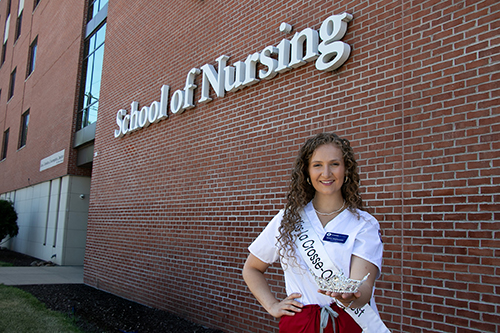
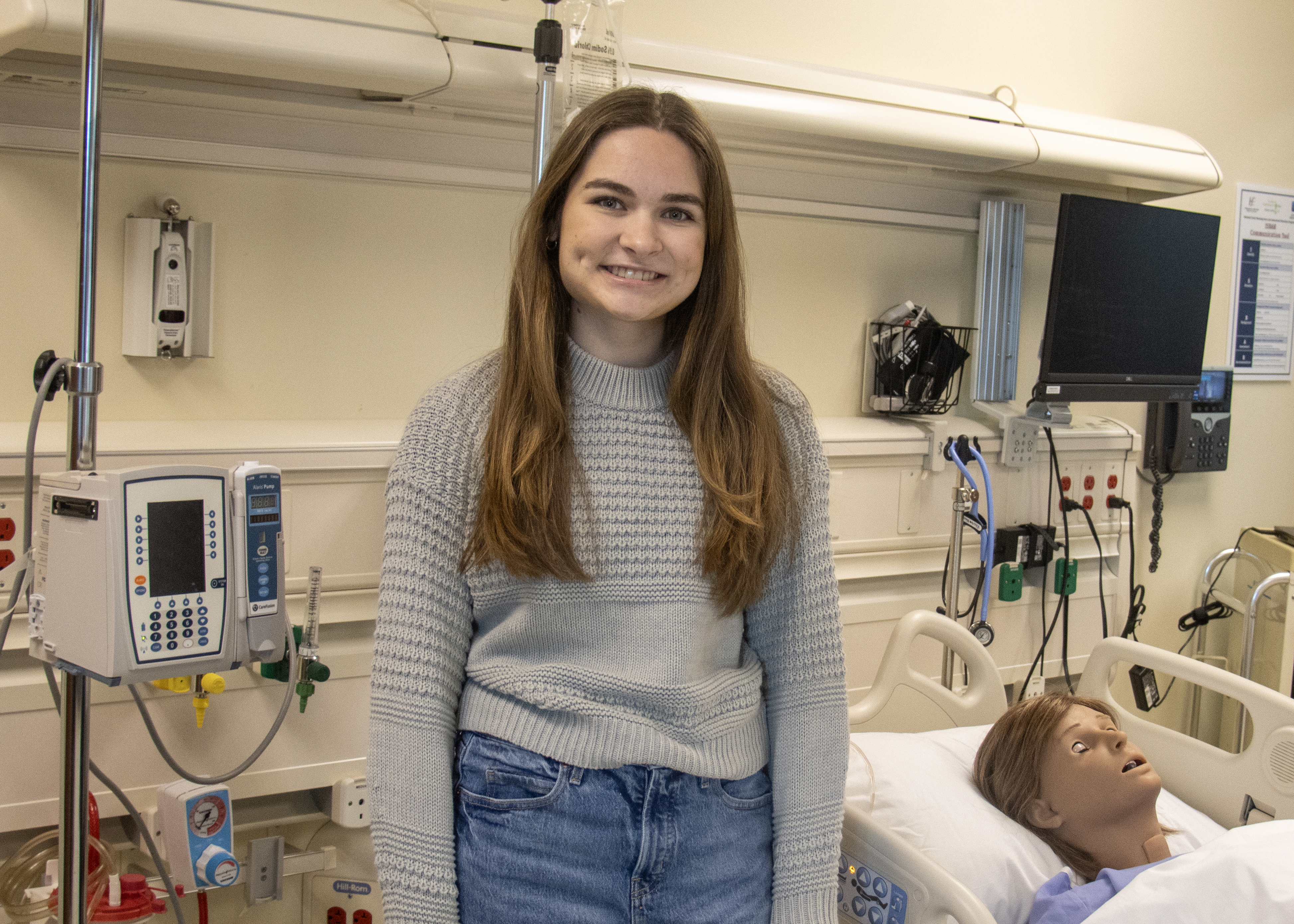
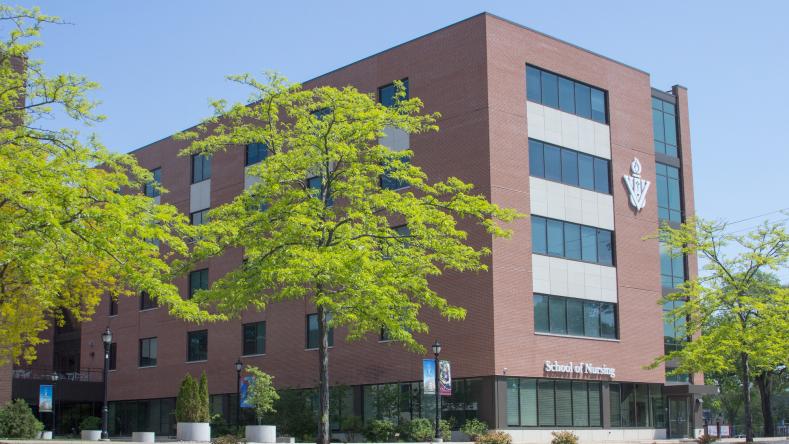
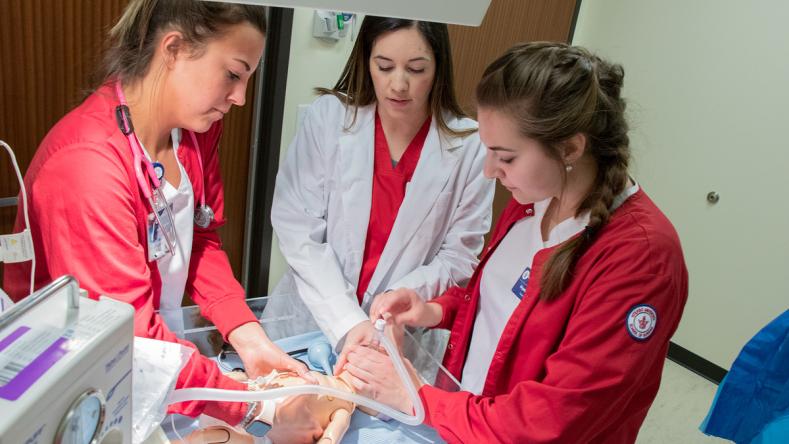
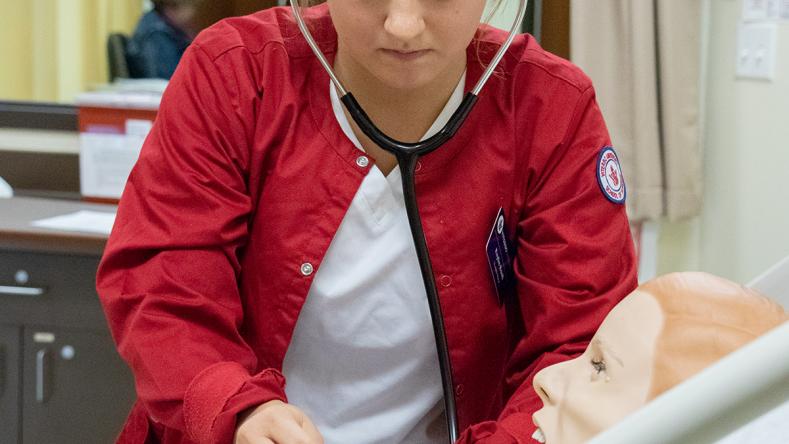
Viterbo’s nursing program prepares you to become confident, highly skilled nurses who deliver exceptional, compassionate care. Through hands-on learning in a state-of-the-art clinical simulation lab, you will build critical thinking, clinical judgment, and real-world experience before entering clinical settings. 

Program Highlights:

  • Direct admission
  • Early clinical placements with regional healthcare leaders
  • State-of-the-art Clinical Simulation Learning Lab
  • High state board (NCLEX-RN) pass rates
  • 100% BSN program grads are employed in their field

Careers in Nursing

Common nursing specialties include...

  • Emergency room nurse
  • Oncology nurse
  • Critical care/ICU nurse
  • Labor and delivery nurse
  • Pediatric nurse
  • Geriatric nurse

100% BSN program grads are employed in their field

High state board (NCLEX-RN) pass rates

$81,000 median salary for RNs with a BSN degree

Why study this program at Viterbo?

Campus shot with flowers

Ready to get started?

Request Further Information

Subscribe to Undergraduate