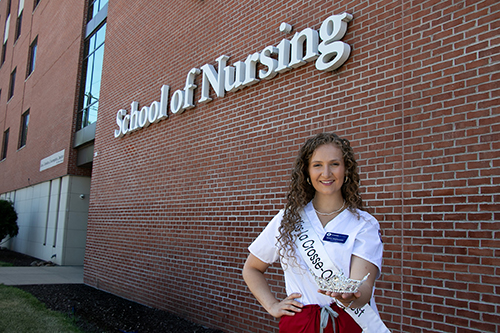
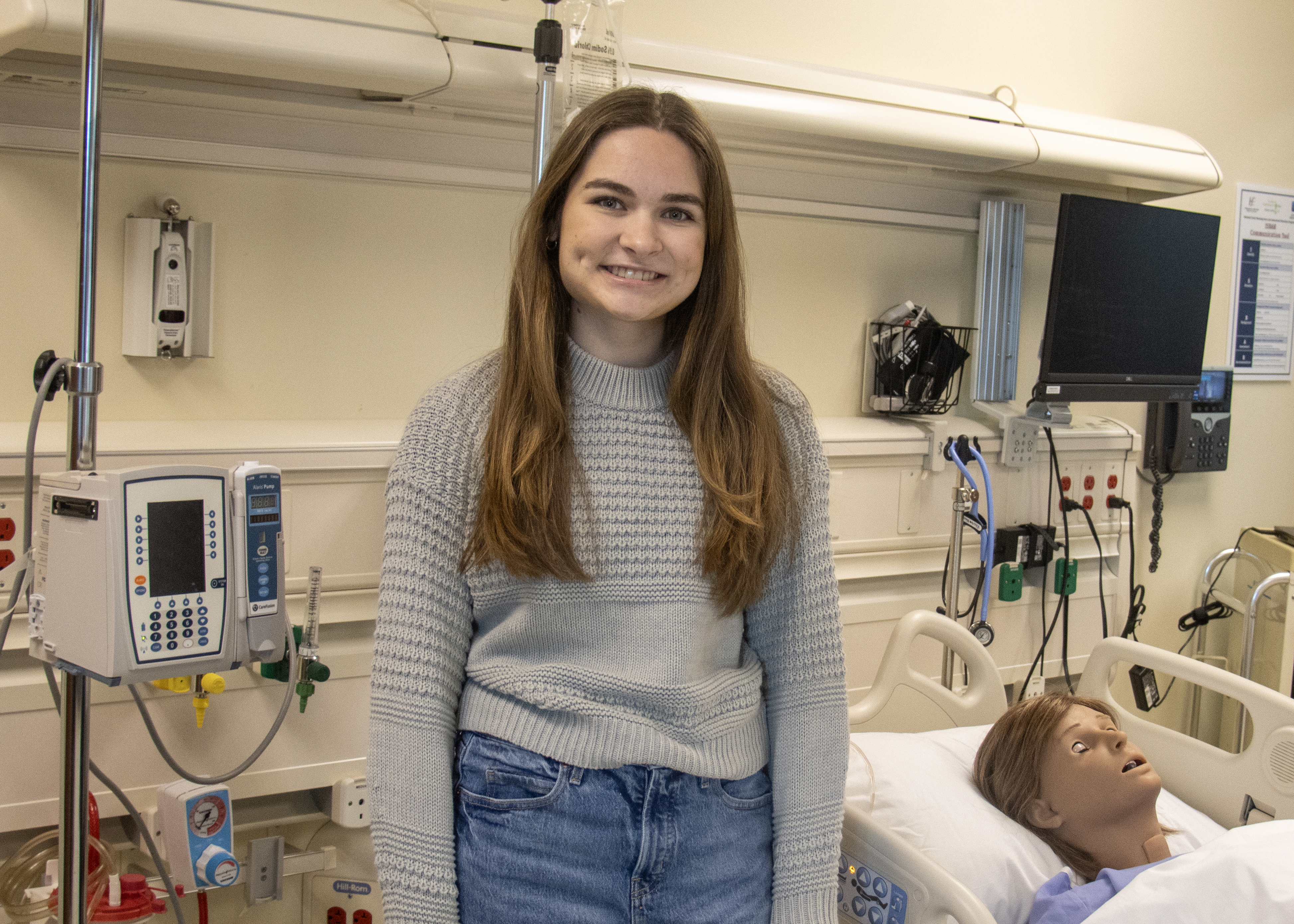
Nursing (BSN Degree Completion)

Complete your BSN online with Viterbo University

Viterbo’s BSN degree completion program is celebrated across the Midwest as one of the top nursing programs by both alumni and employers. 

With more than 25 years of experience, the RN to BSN program offers relevant, evidence-based coursework, personalized support, and flexible scheduling in a convenient, fully online format.

Program Highlights:

$13K–$17K higher average annual earnings with a BSN

98% of employers prefer nurses with a bachelor’s degree

Greater access to leadership, public health, and research roles

Why study this program at Viterbo?
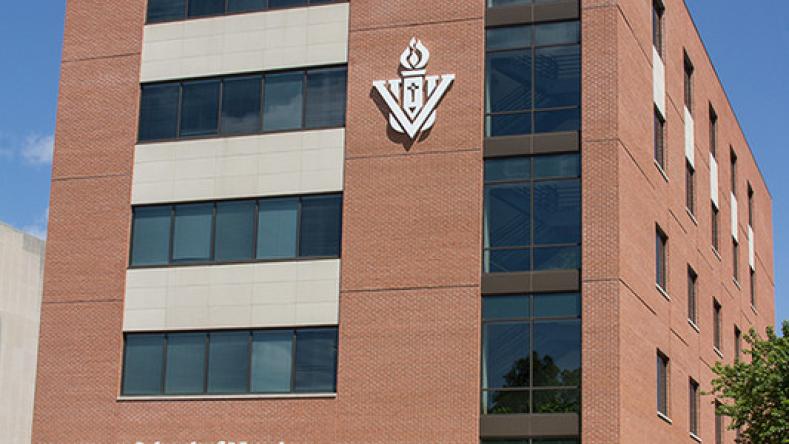
Campus shot with flowers

Ready to get started?

Request Further Information

Data Analytics (BBA)

Overview

The data analytics program combines core business curriculum with courses in business intelligence, data analysis, and computer science, machine learning, and ethics. The program will help develop the next generation of ethically-centered and data-informed business leaders.

Policy
  • All students pursuing the BBA degree must maintain a cumulative grade point average of 2.5 or higher (on a 4.0 scale) in the major requirement courses, and students must receive a letter grade of C (2.0) or higher in each of these courses. If a grade of CD or below is earned in any of these courses, the course must be repeated until a grade of C or higher is achieved. Students pursuing the business education major must maintain a 2.75 grade point average in all business and education coursework.
  • All transfer students seeking an undergraduate degree offered by the Dahl School of Business must earn a minimum of 15 credits of business or computer science coursework at Viterbo University.
  • Students completing a bachelor completion degree may not concurrently double major or double degree in a major offered as a traditional student major. 
Learning Outcomes
  • Apply principles of various business disciplines to solve complex issues using strategic and critical approaches to decision-making and problem solving.
  • Demonstrate sound ethical decision-making skills to machine learning, logistics, data visualization, strategy, project management, business forecasting and modeling.
  • Demonstrate capacity to clean, prepare, and utilize data in analytics tasks.
  • Communicate clearly and objectively and effectively convey business intelligence.

The Servant Leadership Embedded Certificate is embedded within the Business Core curriculum. The certificate outcomes include the following:

  • Practice ethical decision-making
  • Communicate through storytelling
  • Develop contemplation and discernment
  • Understand how to build community and support the Common Good
Addendum

Data Analytics (transfer agreements) Major (Bachelor of Business Administration)

The Associate of Applied Science (AAS) degree must have been earned after May 2019 or earlier so long as the curriculum is similar enough to the 2023 AAS curriculum to meet ACBSP accreditation requirements as determined by a Viterbo transfer specialist. Students may not begin these specifically-articulated transfer programs or be considered a student in these programs until the AAS degree has been completed and documented on the technical college transcript. A student who did not complete the AAS degree could instead complete the requirements of the general major, and any completed courses of the AAS would count toward the major, but in order to come into this articulated transfer agreement program, the AAS must be completed prior to transfer to Viterbo. The student cannot be dually enrolled.

  • Core curriculum and mission seminars (32-52 credits) – see core curriculum section of catalog
  • Major requirements (28-48 credits) – see below
  • Final degree requirements – a minimum of 120 college level credits, minimum of 40 credits at the 300/400 level

Transfer courses and waivers and/or substitutions could modify the required credit total in the core curriculum and major.

Western TC - Data Analytics

ACCT 212, BLAW-343, DATA-498, ECON-101, FINA-331, INFO-103, MATH-230, 335, MGMT-374, MKTG-351, SVLD-260, 4 credits of MGMT-487

Communication Disorders and Sciences (BS)

Overview

The Communication Disorders and Sciences program is 54 to 57 credits of core coursework that will build an understanding of the biological, physical, social, and linguistic aspects of communication. Through facility mentorship, coursework, and clinical observations students will develop an understanding of what happens when communication is impaired.

Policy

Students majoring in CDS must maintain a CDS grade point average (GPA) of 3.0 to continue in and graduate from this program. The CDS GPA is based on all grades earned in the required and elective courses taken in CDS and required support courses. Any student whose overall CDS GPA falls below 2.9 will be placed on probation for one semester and a remediation plan will be put into place. If the CDS GPA is not raised during that semester, the student may not enroll in further CDS courses. An earned letter grade of a D or lower in any CDS or CDS support course will not be credited toward the CDS major.

Learning Outcomes
  • Demonstrated knowledge of statistics as well as the biological, physical, and social/behavioral sciences
  • Demonstrated introductory knowledge of basic human communication processes, including the appropriate biological, neurological, acoustic, psychological, developmental, linguistic and cultural bases
  • Demonstrated ability to integrate information pertaining to normal and abnormal human development across the life span
  • Demonstrated introductory knowledge of American Sign Language and Deaf Culture
  • Twenty-five (25) hours of guided observation of SLP clinical and/or educational practice.
     

Elementary Education (BS Degree Completion)

Overview

Viterbo’s elementary education degree completion program is an online program that provides a pathway to licensure as an elementary educator for those who do not currently hold a bachelor’s degree. Typically students enter this program having earned an associate degree or have 35–65 credits of undergraduate coursework. In this program students earn a BS in elementary education within two to three years.

Policy
Learning Outcomes

Developed by the Interstate Teacher Assessment and Support Consortium (InTASC) and adopted by Wisconsin Department of Public Instruction (DPI)

  • LEARNER DEVELOPMENT – The teacher understands how learners grow and develop, recognizing that patterns of learning and development vary individually within and across the cognitive, linguistic, social, emotional, and physical areas, and the teacher designs and implements developmentally appropriate and challenging learning experiences.
  • LEARNING DIFFERENCES – The teacher uses understanding of individual differences and diverse cultures and communities to ensure inclusive learning environments that enable each learner to meet high standards.
  • LEARNING ENVIRONMENTS – The teacher works with others to create environments that support individual and collaborative learning and that encourage positive social interaction, active engagement in learning, and self-motivation.
  • CONTENT KNOWLEDGE – The teacher understands the central concepts, tools of inquiry, and structures of the discipline(s) he or she teaches and creates learning experiences that make these aspects of the discipline accessible and meaningful for learners to assure mastery of the content.
  • APPLICATION OF CONTENT – The teacher understands how to connect concepts and use differing perspectives to engage learners in critical thinking, creativity, and collaborative problem solving related to authentic local and global issues.
  • ASSESSMENT – The teacher understands and uses multiple methods of assessment to engage learners in their own growth, to monitor learner progress, and to guide the teacher’s and learner’s decision making.
  • PLANNING FOR INSTRUCTION – The teacher plans instruction that supports every student in meeting rigorous learning goals by drawing upon knowledge of content areas, curriculum, cross-disciplinary skills, and pedagogy, as well as knowledge of learners and the community context.
  • INSTRUCTIONAL STRATEGIES – The teacher understands and uses a variety of instructional strategies to encourage learners to develop deep understanding of content areas and their connections and to build skills to apply knowledge in meaningful ways.
  • PROFESSIONAL LEARNING AND ETHICAL PRACTICE – The teacher engages in ongoing professional learning, uses evidence to continually evaluate his/her practice, particularly the effects of his/her choices and actions on others (learners, families, other professionals, and the community), and adapts practice to meet the needs of each learner.
  • LEADERSHIP AND COLLABORATION – The teacher seeks appropriate leadership roles and opportunities to take responsibility for student learning, to collaborate with learners, families, colleagues, other school professionals, and community members to ensure learner growth, and to advance the profession.
  • VITERBO STANDARD – The teacher demonstrates personal qualities and values which reflect the Franciscan values identified in the Viterbo University teacher education conceptual framework.

Computer Science (BS)

Overview

Viterbo’s computer science program is 41 credits (internship pathway) or 47 credits (co-op pathway) of core coursework, consisting of computer science, mathematics, information systems, and management courses. In combination with core curriculum, the complete credit load for this program is 98-108 credits. Students will choose a concentration track outside of computer science to apply skills within that area (business, creative design, data science, engineering or mathematics), take part in team-based, industry-related projects embedded into their coursework, and have an internship or co-op experience.

Learning Outcomes
  • Analyze a complex computing problem and to apply principles of computing and other relevant disciplines to identify solutions.
  • Design, implement, and evaluate a computing-based solution to meet a given set of computing requirements in the context of the program’s discipline.
  • Communicate effectively in a variety of professional contexts.
  • Recognize professional responsibilities and make informed judgments in computing practice based on legal and ethical principles.
  • Function effectively as a member or leader of a team engaged in activities appropriate to the program’s discipline.
     
Addendum

Computer Programming Certificate: CSCI-110, 160, 200.

Associate of Science in Education (ASEd)

Overview

Associate of Science in Education is a credential awarded to a student in a Viterbo University education program who satisfies the requirements of the degree as outlined below. With this earned Associate of Science in Education degree, students are eligible to apply for a substitute teaching license in the state of Wisconsin.

Policy

A maximum of 45 credits may be transferred into the program.

Learning Outcomes
  • Ethical Reasoning: Students respond to ethical issues, using informed value systems.
  • Critical Thinking: Students comprehensively explore issues, ideas, artifacts, and events before accepting or formulating and opinion or conclusion.
  • Oral Communication and Written Communication: Students speak and write to suit varied purposes, audiences, disciplines, and contexts.
  • Develop foundational professional knowledge of theory and pedagogy appropriate for PK-12 school settings.
  • Describe and apply child development principles in planning lessons for children from PK-12 school settings.
     

Ethics, Culture, and Society (BS)

Overview

Viterbo’s interdisciplinary program combines courses from at least two academic disciplines, including history, philosophy, and art. Our program emphasizes collaborative problem-solving and community engagement.

Personal choice will drive your pathway, with interdisciplinary studies focused on perspectives and creativity applied to real-world issues in the La Crosse community and beyond. Course-embedded assignments are connected to the D.B. Reinhart Institute for Ethics in Leadership series of speakers and annual conference.

Policy

All majors are required to take a minimum of 12 credits in one discipline and nine credits in another, unrelated discipline. One of these disciplines must be in the Liberal Arts (art, history, literature, philosophy, mathematics, and social and natural sciences). All majors are encouraged to take more than the minimum requirements. For transfer students/students changing majors: No substitutions for ECAS-220/320 or ECAS-400. Credits for former major shift to a minor.

Learning Outcomes
  • Think critically in interdisciplinary contexts
  • Communicate effectively in integrated and interdisciplinary contexts
  • Apply ethical reasoning to connect experience and academic knowledge
  • Reflect and conduct moral self-assessment
Addendum

Ethics, Culture, and Society (transfer agreement) Major (Bachelor of Science)

Students with an earned AAS degree in legal studies/paralegal from Western Technical College may earn a Bachelor of Science with a major in ethics, culture, and society. The degree must have been earned May 2016 or later.  Students may not begin this program or be considered a student in this program until the AAS degree has been completed and documented on a transcript. The student cannot be dually enrolled. The AAS degree must be completed prior to transfer to Viterbo. Students must fulfill all requirements for the Core Curriculum, mission seminars, major requirements, Bachelor of Science requirements and final degree requirements. Transfer courses and waivers and/or substitutions could modify the credit total in the core curriculum and major.

Art Education (BAED)

Overview

Art education majors at Viterbo University start with a year-long Freshman Art Foundations experience, or "boot camp", where drawing, design, and art history lessons help build confident artists and teachers. Art education students learn from practicing artists and designers in state-of-the-art studios and digital labs. Besides learning artistic techniques on campus, art education majors will spend much of their time in the community and area schools learning and gaining hands-on teaching experience. Art education students begin teaching, as part of the Afterschool Art Workshop for children ages 5–12, then as teaching artists in residence in K–12 schools. These experiences are unique to Viterbo's art education program. With an art education degree from Viterbo University, graduates will be ready to teach artistic techniques and inspire people of all ages. This foundation, paired with education courses taken through the School of Education, prepares students for a teaching career in public or private schools.

Learning Outcomes

Developed by the Interstate Teacher Assessment and Support Consortium (InTASC) and adopted by Wisconsin Department of Public Instruction (DPI)

  • LEARNER DEVELOPMENT – The teacher understands how learners grow and develop, recognizing that patterns of learning and development vary individually within and across the cognitive, linguistic, social, emotional, and physical areas, and the teacher designs and implements developmentally appropriate and challenging learning experiences.
  • LEARNING DIFFERENCES – The teacher uses understanding of individual differences and diverse cultures and communities to ensure inclusive learning environments that enable each learner to meet high standards.
  • LEARNING ENVIRONMENTS – The teacher works with others to create environments that support individual and collaborative learning and that encourage positive social interaction, active engagement in learning, and self-motivation.
  • CONTENT KNOWLEDGE – The teacher understands the central concepts, tools of inquiry, and structures of the discipline(s) he or she teaches and creates learning experiences that make these aspects of the discipline accessible and meaningful for learners to assure mastery of the content.
  • APPLICATION OF CONTENT – The teacher understands how to connect concepts and use differing perspectives to engage learners in critical thinking, creativity, and collaborative problem solving related to authentic local and global issues.
  • ASSESSMENT – The teacher understands and uses multiple methods of assessment to engage learners in their own growth, to monitor learner progress, and to guide the teacher’s and learner’s decision making.
  • PLANNING FOR INSTRUCTION – The teacher plans instruction that supports every student in meeting rigorous learning goals by drawing upon knowledge of content areas, curriculum, cross-disciplinary skills, and pedagogy, as well as knowledge of learners and the community context.
  • INSTRUCTIONAL STRATEGIES – The teacher understands and uses a variety of instructional strategies to encourage learners to develop deep understanding of content areas and their connections and to build skills to apply knowledge in meaningful ways.
  • PROFESSIONAL LEARNING AND ETHICAL PRACTICE – The teacher engages in ongoing professional learning, uses evidence to continually evaluate his/her practice, particularly the effects of his/her choices and actions on others (learners, families, other professionals, and the community), and adapts practice to meet the needs of each learner.
  • LEADERSHIP AND COLLABORATION – The teacher seeks appropriate leadership roles and opportunities to take responsibility for student learning, to collaborate with learners, families, colleagues, other school professionals, and community members to ensure learner growth, and to advance the profession.
  • VITERBO STANDARD – The teacher demonstrates personal qualities and values which reflect the Franciscan values identified in the Viterbo University teacher education conceptual framework.

Engineering (BS)

Overview

Viterbo’s engineering program was created in response to the need for engineers and at the request of employers. We work with local industry leaders to provide technical curriculum that establishes a solid foundation of engineering skills while developing students’ communication and leadership skills through a liberal arts education and Viterbo University’s core values.

For more information on the engineering program, click here.

Learning Outcomes
  • Problem Solving Skills (ABET 1): An ability to identify, formulate, and solve complex engineering problems by applying principles of engineering, science, and mathematics 
  • Designing in Context (ABET 2): An ability to apply engineering design to produce solutions that meet specified needs with consideration of public health, safety, and welfare, as well as global, cultural, social, environmental, and economic factors 
  • Communication (ABET 3): An ability to communicate effectively with a range of audiences 
  • Ethical Responsibilities (ABET 4): An ability to recognize ethical and professional responsibilities in engineering situations and make informed judgments, which must consider the impact of engineering solutions in global, economic, environmental, and societal contexts 
  • Working within a Team (ABET 5): An ability to function effectively on a team whose members together provide leadership, create a collaborative and inclusive environment. Establish goals, plan tasks, and meet objectives 
  • Experimental Design and Analysis (ABET 6): An ability to develop and conduct appropriate experimentation, analyze and interpret data, and use engineering judgment to draw conclusions 
  • Continuous Learning Techniques (ABET 7): An ability to acquire and apply new knowledge as needed, using appropriate learning strategies 
Subscribe to Major