RESPOND Program
September 2026 - June 2027
Recovery Education through Synergistic Partnerships to address OUD for Primary CliNical ProviDers (RESPOND) prepares healthcare professionals to provide high-quality, evidence-based prevention, treatment, and recovery services for individuals with mental health conditions and substance use disorders (SUD), including opioid use disorder (OUD).
Using an interprofessional, team-based approach, RESPOND equips participants with the knowledge, skills, and practical tools needed to expand access to integrated behavioral healthcare in underserved community-based settings.
Cost & Compensation
RESPOND is fully funded through a federal grant.
Participant Benefits
- $7,000 tuition fully covered
- $0 cost to participate
- $500 stipend upon successful completion of the program
- Continuing education credits and enhanced clinical expertise
Agency Benefits
Participating agencies receive $2,500 for each participant to support:
- Clinical supervision
- Team-based learning and implementation activities
- Protected work time for participants to complete training modules
Agencies may enroll up to five participants, making them eligible to receive up to $12,500 in agency support during the cohort.
Format
Blended (Online and In-Person)
Who Should Apply?
RESPOND is designed for practicing:
- Nurse Practitioners (NPs)
- Physician Assistants (PAs)
- Registered Nurses
- Health Service Psychologists
- Professional Counselors
- Social Workers
Organizations are encouraged to identify interprofessional teams of up to five employees to participate together.
Program Details
This 9-month program provides a combination of didactic, experiential, and practical training.
- Participants will complete six asynchronous learning modules over the course of nine months.
- Participants will complete a project in collaboration with their clinic/hospital.
- RESPOND partners and participants will attend a summit to increase their expertise and present their findings.
- Upon successful completion of the program, participants will receive course materials and a certificate of completion.
Why Participate?
RESPOND helps healthcare organizations strengthen their workforce and expand access to integrated behavioral healthcare.
By the end of the program, participants will:
- Increase confidence in treating mental health conditions and SUD/OUD
- Strengthen interprofessional collaboration
- Implement evidence-based practices within their organizations
- Improve patient access to high-quality, integrated care
- Build sustainable systems that support long-term behavioral health integration

Course Curriculum and Schedule
| Module | Learning Content | Module Topic |
| Module 1 | Care in Context: Interprofessional Teams | Collaborations among prescribers (physicians, nurse practitioners, physician assistants), counselors, and social workers. |
| Module 2 | Assessment | Diagnosing SUD, OUD, and co-occurring health, mental, and psychosocial issues. |
| Module 3 | Pharmacological and Counseling Approaches | MOUD and best counseling practices |
| Module 4 | Telehealth for Rural and Underserved Communities | Mental health system, disparities, and evidence that telehealth improves outcomes in rural communities. |
| Module 5 | Systemic and Familial Approaches in the Behavioral Health Treatment | Mental health system, disparities, and family supports in SUD/OUD |
| Module 6 | Trauma and Crisis: An Integrated Approach for Children and Youth | Adverse childhood experiences and neurodevelopment |
For more details, open the PDF below:
Apply for the Upcoming Cohort!
Meet the Team
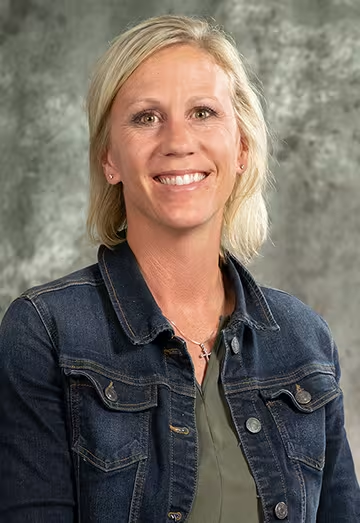
Erin Miess, MSW, APSW - RESPOND Project Director
Erin is the director of field education and an assistant professor in the Social Work, Sociology and Criminal Justice Department at Viterbo. She served on the steering committee of Viterbo’s InSTEP Grant. In addition to the work she does for the university, Miess is on a housing advocacy committee through Habitat for Humanity and serves as a mental health clinician for the Wisconsin Comprehensive Community Services program. She has extensive experience in the field, including work with the Wisconsin Department of Children and Families and the Child Welfare and Juvenile Justice Systems.
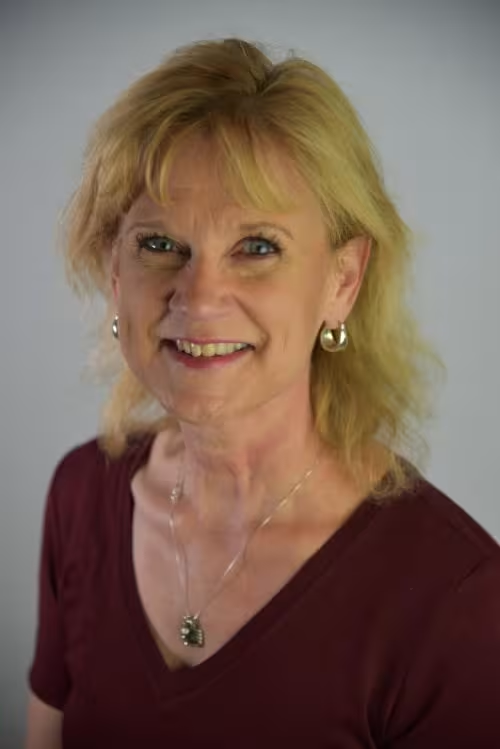
Linda L. Sherony, MBA – RESPOND Program Coordinator
Linda taught business classes for 15 years at University of Wisconsin – La Crosse (UWL) and St. Norbert College. She has taught accounting, economics, finance, management, marketing, and business communications. In 2019, the UWL student athletes recognized Linda as “Faculty of the Year.” She was nominated six times for the provost’s teaching award at UWL. Linda has a heart for helping people and is a certified EFT (Emotional Freedom Technique, also known as tapping) practitioner, a Human Design guide, and a Life and Business Coach. She has an entrepreneurial spirit, and owned and operated a quilting and knitting store in the early 2000s.
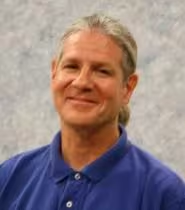
William R. Bakalars, MS, LPC, CSAC - RESPOND Project Facilitator
Bill is an Assistant Professor of Psychology at Viterbo University with 37 years of clinical experience in addiction and mental health counseling. Within the Mayo Clinic’s Department of Dialectical Behavior Therapy, Bill has served a number of roles. As the Individual and Skills Group facilitator he worked in an evidenced-based program addressing the needs of people suffering from borderline personality disorder. In addition to that, he engaged in client outcome and research through Mayo Clinic regarding symptom reduction and medical utilization of persons with borderline personality disorder. Bill also assisted in the development of comprehensive Dialectical Programs for both adult and adolescent clients.
Thank You to our Clinical Partners:
| 
|
| 
|
Contact Us
Linda Sherony, MBA
RESPOND Grant Project Coordinator, Center for Professional Learning
llsherony@viterbo.edu
608-796-3712
This project is supported by the Health Resources and Services Administration (HRSA) of the U.S. Department of Health and Human Services (HHS) as part of an award totaling $1,412,845.00 with 0% percentage financed with non-governmental sources. The contents are those of the author(s) and do not necessarily represent the official views of, nor an endorsement, by HRSA, HHS or the U.S. Government.