
Dates: May 6 (Thursday)–May 7 (Friday) 2027
Location: Viterbo University
Keynote Speakers: Peter Feigl and Alexandra Zapruder
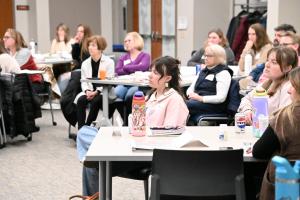
More than ever, it is important to teach about the Holocaust to prevent atrocities from being repeated. Thus, this educators' workshop will empower middle and high school teachers who want to learn more about teaching the lessons of the Holocaust in their schools and will feature national and local Holocaust scholars. "To be exposed to Holocaust scholars working in this field and survivors who bring an immediacy to the subject is key,” says Bill Younglove, instructor and teacher supervisor at California State University, Long Beach. “Area teachers are no doubt the chief beneficiaries, but the community at large should consider itself fortunate to have such an ongoing program in its midst."
2027 Workshop Presenters
- Darryle Clott
- Steve Feinberg
- Dana Humphrey
- Jon Reiner
- Annabelle Zawistowski
Workshop schedule coming soon.
Keynote Speakers Peter Feigl and Alexandra Zapruder
About Peter Feigl
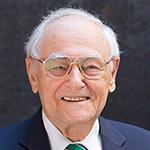
Born in Berlin, Germany, Peter Feigl and his parents eventually fled to Vichy France to escape the Nazis. In summer 1942, the Vichy government, in collaboration with the Nazis, began rounding up Jews and deporting them to German concentration camps in Poland. On Aug. 26, 1942, unbeknownst to Feigl, who was in a Quaker summer camp, his parents were arrested and deported to Auschwitz, where they were killed within a month of their arrival. With the help of the Quakers, Feigl was sent to the predominantly Protestant village of Le Chambon-sur-Lignon. Sheltered in the surrounding area were nearly 5,000 people, among whom were 3,500 Jews, including many children. In the village, Feigl was given false identity papers and sent as a boarding student to a high school in Figeac, France. From there, after escaping arrest during a German raid in May 1944, Feigl escaped to neutral Switzerland over barbed wire fences with the help of the Jewish underground.
Feigl immigrated to the U.S. in July 1946, where he served three years in the U.S. Air Force. For 35 years, Feigl pursued a career in international sales of aircraft and related services in the private sector and spent more than five years as a senior negotiator in the Office of the Secretary of Defense. Since retiring, Feigl has traveled around the world speaking about his experiences and two diaries he wrote detailing his experiences during the Holocaust. In 1954, Feigl married Leonie Warschauer, and they have two daughters. He is now a volunteer at the United States Holocaust Memorial Museum. He is the author of the book, One Man, Two Voices: Peter Feigl’s Diary and Testimony.
About Alexandra Zapruder
Alexandra Zapruder began her career as a member of the founding staff of the United States Holocaust Memorial Museum (USHMM) in Washington, D.C. A graduate of Smith College, she served on the curatorial team for the museum’s exhibition for young visitors, Remember the Children, Daniel’s Story. She earned an EdM in Education at Harvard University in 1995.
In 2002, Zapruder completed her first book, Salvaged Pages: Young Writers’ Diaries of the Holocaust, which was published by Yale University Press and won the National Jewish Book Award in the Holocaust category. She wrote and co-produced I’m Still Here, a documentary film for young audiences based on her book, which aired on MTV in May 2005, and was nominated for two Emmy awards. In 2016, she published her second book, Twenty-Six Seconds: A Personal History of the Zapruder Film, which tells the story of her grandfather’s home movie of President Kennedy’s assassination. She has been published in Parade, LitHub, Smithsonian, and The New York Times.
Zapruder serves as the Education Director of The Defiant Requiem Foundation and is a member of the Board of Directors for the Educators’ Institute for Human Rights, a nonprofit that develops partnerships with teachers in post-conflict countries to provide training in best practices on human rights, genocide prevention, and Holocaust education.
Our Holocaust survivors will offer two presentations.
The first presentation is a school show. This ticket-only presentation in partnership with Arts for Young America is Wednesday, May 5, at 10 a.m. NOTE: Due to high demand, the Arts for Young America school show will ONLY be available to educators who enroll in Viterbo’s annual Teaching the Holocaust Workshop. Registration for the educators’ workshop goes live on Oct. 1, 2026, at 8 a.m. AFTER registering for the workshop, please send an email to Rick Kyte at rlkyte@viterbo.edu with your name, school, contact information, and the number of students you would like to attend the program. Rick will put your class on a list for seating at the program. Those who register first will have priority reserving seats for their students, not the entire grade nor district.
The second presentation is open to the public and no registration or ticket is required. All are welcome. This will occur on Thursday, May 6, at 7 p.m. at the Viterbo University Fine Arts Center Main Theatre and will be livestreamed on the Viterbo Ethics YouTube channel.
Teaching Resources
Squirrel is Alive Teaching Guide
![Promotions_Squirrel is Alive_image of book cover [2].jpg](/sites/default/files/styles/medium/public/Promotions_Squirrel%20is%20Alive_image%20of%20book%20cover%20%5B2%5D.jpg?itok=nhr6vtcS "Promotions_Squirrel is Alive_image of book cover [2].jpg")
The educational content for Squirrel is Alive includes interactive materials for classroom use. Strategies for before, during, and after reading includes discussion questions, writing prompts, and classroom extensions allowing students to engage directly with the text and understand both the historical context and the contemporary application of the book. The materials are designed for middle school and high school use and will align to national standards and best teaching practices.